

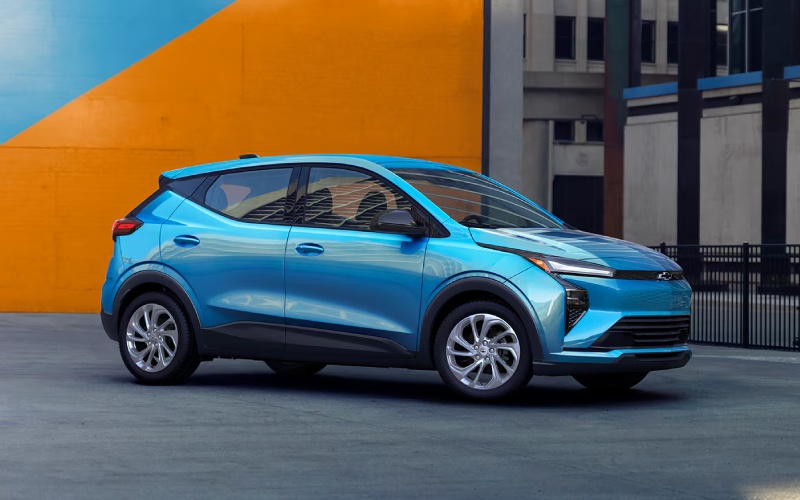
Chevrolet of Corsicana - Can the Bolt’s NACS charge port use Tesla Superchargers around Waxahachie, TX?
The return of Bolt brings a major charging advantage for shoppers who want an electric vehicle that fits real driving habits around Central and North Texas. For many EV shoppers, charging access is just as important as range, screen size, cargo space, or safety technology. A vehicle can look great on paper, but the ownership experience feels much better when public charging is easier to find and simple to understand. That is why Bolt’s standard NACS charge port is such an important detail for drivers comparing compact EVs.
Chevrolet designed the new Bolt with a standard NACS charge port, which helps connect the vehicle to a broader compatible public charging network, including Tesla Superchargers. That matters for shoppers around Waxahachie, TX who may drive toward Dallas, Corsicana, Hillsboro, or smaller communities along familiar Texas routes. More charging compatibility means more flexibility, and flexibility is what helps EV ownership feel normal. Chevrolet also notes that more than 250,000 available chargers are part of the public charging ecosystem across the U.S. and Canada, with more DC fast chargers that are compatible with NACS-equipped Bolt models.
Why the NACS Charge Port Matters
NACS stands for North American Charging Standard, and its inclusion on Bolt helps reduce one of the most common barriers to EV adoption: uncertainty about where to charge away from home. Instead of thinking only about one charging brand or one route, shoppers can look at a wider charging landscape. For drivers serving Ennis, Waxahachie, and Hillsboro, that added access can be helpful for commuting, family visits, workdays, shopping trips, and regional travel.
The standard NACS port also makes Bolt feel more future-ready. EV charging infrastructure continues to grow, and a vehicle equipped to use more compatible charging options gives owners better confidence as networks expand. For shoppers who have been waiting to move into an EV until charging became more convenient, Bolt’s setup directly addresses that concern. It is not just about the plug; it is about the freedom to plan less and drive more comfortably.
How Fast Can Bolt Charge?
Bolt supports 150 kW+ public DC Fast Charging, which Chevrolet states is more than 2.5x faster than Bolt EUV. With compatible DC public fast charging, Chevrolet provides a GM-estimated 10%-80% charging time of about 25 minutes. That kind of charging speed can make a meaningful difference during busy days when a driver needs a useful charge without spending excessive time stopped.
Fast charging is especially helpful for drivers who cannot charge at home every night or who occasionally take longer routes. While many EV owners handle most charging at home, public charging fills the gap for travel, unexpected schedule changes, or high-mileage days. The benefit of Bolt is that it combines an EPA-estimated 262 miles of electric range with faster DC charging and expanded compatible charger access. Those three advantages work together to create a more convenient EV ownership experience.
- Daily confidence: The EPA-estimated 262 miles of electric range can support normal errands, commutes, and appointments without constant charging stops.
- Public charging flexibility: The standard NACS charge port helps connect Bolt with compatible public chargers, including Tesla Superchargers.
- Faster road-trip support: GM-estimated 10%-80% charging in about 25 minutes with compatible DC public fast charging can reduce downtime.
- Better long-term fit: Growing public charging access helps Bolt feel ready for expanding EV infrastructure.
Those points matter because EV ownership is not defined by one charging session. It is the combined experience over weeks and months. If a driver can charge at home most of the time, use public charging when needed, and rely on a practical range estimate, the transition from gasoline to electric can feel much smoother.
What About Charging at Home?
Home charging remains a major part of EV convenience. Many owners prefer plugging in overnight and starting the next day with the battery ready for normal driving. Chevrolet notes that with Bolt’s new battery technology, regularly charging to 100% capacity is recommended to help achieve the fastest overall charging speeds. That guidance is useful because EV battery care can vary by model, and shoppers should always understand the manufacturer’s recommendations for the vehicle being considered.
For a household around Waxahachie, home charging can turn the vehicle into a simple daily tool. Instead of planning around fuel stops, a driver may plug in during routine downtime. Public charging then becomes a backup or travel solution rather than the only way to keep moving. During the shopping process, it is wise to ask about charger types, installation considerations, electrical needs, and how driving habits may affect charging frequency.
How Charging Fits the Rest of Bolt
Charging access is a highlight, but Bolt is not a one-feature EV. The redesigned cabin includes an 11.3" diagonal touchscreen and an 11" diagonal Driver Information Center, helping keep vehicle information, entertainment, and controls easy to view. Google built-in compatibility adds helpful voice support through Google Assistant, while available wireless phone charging can reduce cord clutter during daily driving.
Safety and driver assistance also strengthen Bolt’s appeal. Every model includes more than 20 standard safety and driver assistance features. Adaptive Cruise Control, Front and Rear Park Assist, and IntelliBeam® are examples of systems designed to support confidence during common driving situations. Available Super Cruise® driver assistance technology adds another premium layer for compatible roads, giving shoppers an advanced hands-free driving option in a compact EV.
- Ask about compatible chargers: Confirm how the standard NACS charge port works with public charging stations and Tesla Superchargers.
- Discuss home charging: Review charger types, installation basics, and how often the vehicle may need to be plugged in based on personal driving.
- Review range needs: Compare the EPA-estimated 262 miles of electric range with typical weekly mileage.
- Test the technology: Use the touchscreen, Driver Information Center, Google built-in compatibility, and available wireless phone charging during a visit.
- Compare trims: Look at LT for versatile value and RS for sporty styling with 17" Black wheels, RS badging, Evotex seats with Red stitching, and multi-color ambient lighting.
This kind of checklist can help shoppers move beyond general EV questions and focus on daily ownership. A person who understands charging, range, cabin tech, and safety features before buying can make a more confident decision. Chevrolet GMC of Corsicana can help walk through those details with a practical, local mindset so the vehicle makes sense for real routes and real routines.
Frequently Asked Questions:
Can Bolt use Tesla Superchargers?
Yes, Chevrolet states that Bolt’s standard NACS DC port helps make charging possible from most public chargers, including compatible Tesla Superchargers. Availability and compatibility can vary by station, so drivers should use current charging tools and vehicle guidance when planning a stop.
How long does DC fast charging take?
With compatible DC public fast charging, Bolt has a GM-estimated 10%-80% charging time of about 25 minutes. Charging time can vary based on charger output, battery temperature, battery state of charge, and other conditions, but the estimate highlights a major improvement over the previous Bolt EUV.
Is public charging enough if home charging is not available?
Public charging can support many EV owners, especially with expanded NACS compatibility, but home charging remains the most convenient routine for many drivers. Shoppers without home charging should review nearby chargers, work charging options, and weekly mileage before deciding.
Does Bolt still offer practical range for daily driving?
Yes, Bolt offers an EPA-estimated 262 miles of electric range. That estimate supports a wide range of everyday driving needs, including commuting, errands, and regional trips, while the faster DC Fast Charging capability adds flexibility for longer days.
For shoppers around Waxahachie, TX, Bolt’s charging story is one of its strongest advantages. The standard NACS charge port, compatibility with Tesla Superchargers, 150 kW+ public DC Fast Charging, and EPA-estimated 262 miles of range all work together to reduce the uncertainty that can come with EV shopping. Add the redesigned interior, available Super Cruise® driver assistance technology, and more than 20 standard safety and driver assistance features, and Bolt becomes a smart choice for drivers ready to make electric ownership feel practical, connected, and enjoyable.